

What makes a group of people behave like a team?
2 de June, 2026Data tells you what. Customers tell you why.
16 de June, 2026A few months ago, Marcelo Quintella published a post that caught my attention. After years as CPO and CTO, with stints at Google, Zwift, and Unico IDtech, he had stepped away from leadership to work as a Staff PM individual contributor at Connectly.ai, a conversational AI company. He wanted to get closer to the changes AI was bringing to product teams, to see that transformation through the eyes of someone doing the work every day. What he found was revealing. A lot had changed, the tools are revolutionary, but the hardest problem in product organizations remains the same. Knowing what to build.
What struck me most about Quintella’s move was how clearly he described it. A deliberate decision to work as an IC to see firsthand how AI affects the work of PMs, engineers, and designers, before returning to leadership.
Aíquis Rodrigues, co-host of the Papo na Arena podcast and Senior PM at Hotmart, made a similar move. He stepped down from a Group Product Manager role, with teams under his responsibility, to go back to being an individual contributor PM. One driver was the desire to get closer to AI. The other was an explicit risk calculation. The perception that being a middle manager during this moment of transformation was a vulnerable position. He said that out loud on the podcast, which few people do.
In December 2025, Maikel González Baile published an article describing a decision that had generated puzzled reactions from people around him. After 10 years in management roles and 5 as a CTO, he went back to being an IC. People reacted with confusion and concern. His answer was that he was not taking a step back. He was taking a step in.
The reasoning echoes Quintella’s. Maikel was building AI products, making strategic decisions, guiding teams. But he was not in the day-to-day, experiencing firsthand what the technology could do. He could talk about embeddings and agents, but he was not building with them. That distance started to bother him.
Why this is happening now
Product careers are still widely seen as a one-way ladder. IC, senior, lead, director, VP, C-suite. Moving back toward execution feels, to many people, like a sign that something went wrong. What these examples suggest is the opposite.
AI has created a pace shift unlike anything we have lived through before. A change in how products are discovered, specified, built, and iterated. And that change is happening too fast to follow from a distance.
Gokul Rajaram, who has worked at Google, Facebook, Square, and DoorDash, has been receiving more and more reference requests from directors and VPs of product looking to make exactly this move. In a recent podcast, he said something that captures the argument well. If you have never worked in an AI environment, you will not be seen as credible at an AI-native company. And most of us will be working at an AI-native company ten years from now.
For anyone with ten or twenty years of career ahead of them, the move stops being a step back and becomes an investment.
Gokul also talks about the shift in the leverage equation. A well-equipped IC with AI agents can do today what used to require an entire team. The gap between management and execution in terms of impact has narrowed. That changes the career calculation in a profound way.
My own move
I am going through something similar. A few months ago I teamed up with Anderson Borges, whom I have known since our time together at Conta Azul, to build products together, him as the developer, me on product. The most recent is ReveLumi, a qualitative research agent via WhatsApp.
I am learning things that only show up when you are doing the work. Making product decisions with direct consequences, in short cycles, in an environment where AI is present at every stage of development. That closeness changes the quality of the questions I ask. And it changes the quality of the conversations I have with the teams I advise.
The tension that exists and deserves to be named
Not everyone closer to execution made a deliberate choice. There are leaders who were pushed into a more hands-on role by the company, by business necessity, by a restructuring, by a moment of transition. And many carry a legitimate anxiety, wondering whether those more operational years will pull them away from the strategic leadership role they want to hold.
The answer depends largely on how consciously that period is lived. Those who go through it observing, learning, and connecting what they see in execution to the questions of leadership come out more capable. On the other hand, if someone goes through this moment simply waiting for it to pass, they lose a rare opportunity.
The difference between the two is not in the role. It is in the posture.
What this movement reveals about product leadership
Quintella returned to consulting and leadership with a reinforced conviction in the Product Operating Model. Maikel came back with a deeper understanding of how AI is changing the work of building product. Aíquis is still in the middle of the process, building the repertoire that will inform the decisions he makes as a leader further down the road.
Gokul puts it directly. Going into an IC role now, even for a period, is what will define relevance over the next ten to twenty years of a career.
I return to every conversation with clients with sharper clarity about what is actually happening in product development today.
Leaders who go through the hands-on work in the AI era come back with something hard to acquire any other way. The experience of having built with the new tools, of having felt a different rhythm, of having failed fast and adjusted fast.
At a moment when everything is changing too quickly, staying close to the work may be one of the most honest ways to remain a relevant leader.
Scale your customer research
In a world where AI levels the playing field, deep customer knowledge is the one asset your competitors can’t copy. ReveLumi was built exactly for that. Learn more at revelumi.com.
Workshops, coaching, and advisory services
I’ve been helping companies and their leaders (CPOs, heads of product, CTOs, CEOs, tech founders, and heads of digital transformation) bridge the gap between business and technology through workshops, coaching, and advisory services on product management and digital transformation.
Gyaco Podcasts
At Gyaco, we believe in the power of conversations to spark reflection and learning. That’s why we’ve created “Produto em Pauta” podcast, with new episodes every Thursday.
The main series is called Mentorias: coaching conversations with product professionals, built on the idea that one person’s questions are often the questions of many others. We explore concrete challenges and turn experience into practical insights you can apply in your own context.
Available on YouTube and Spotify. Recorded in Portuguese, with English subtitles on YouTube.
Digital Product Management Books
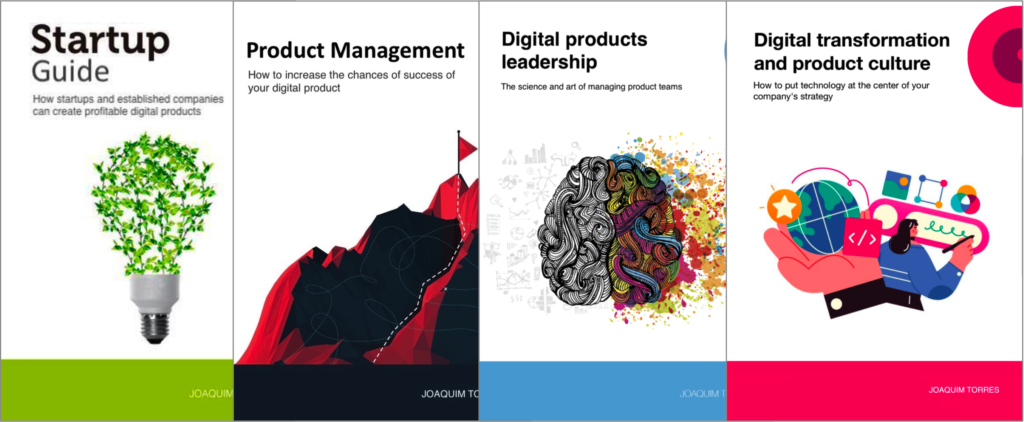
Do you work with digital products? Do you want to know more about managing a digital product to increase its chances of success, solve its user’s problems, and achieve the company objectives? Check out my Digital Product Management books, where I share what I learned during my 30+ years of experience in creating and managing digital products:
- Digital transformation and product culture: How to put technology at the center of your company’s strategy
- Leading Product Development: The art and science of managing product teams
- Product Management: How to increase the chances of success of your digital product
- Startup Guide: How startups and established companies can create profitable digital products