

Why Product Leaders Are Going Back to Doing the Work
9 de June, 2026The ROI of talking to customers
23 de June, 2026In a conversation with Irene Liakos, founder of Product Circle, we landed on a point I couldn’t stop thinking about. We were talking about why so many product teams accumulate data and still make the wrong decisions. Irene made a sharp observation:
Most people look at what users do. Very few try to understand why they do it.
That insight took me back to something that happened at Locaweb. In 2010, we were evaluating whether to build and operate a marketplace connecting web developers with people and companies that wanted a website. On paper it made a lot of sense. We were the largest hosting company in Brazil, we had successfully launched a Website Builder and an Online Store, and we had been serving both sides of that market for years. Usage data from our products indicated that this kind of intermediation was already happening organically. All we needed was an agent in the middle to organize, qualify, and monetize that flow.
The data was clear and the reasoning seemed solid. We were wrong.
When we started talking to customers, something emerged that no data could show. In the relationship between a developer and someone who wants a website, there’s a set of commitments around deadlines and scope. These are informal agreements, negotiated directly between the two parties. When a marketplace steps in, the person who wants the website starts transferring those commitments to the intermediary. And Locaweb neither wanted nor had the skills to take on that role. We killed the product.
The right decision was only possible because we stepped away from the dashboards and had real conversations.
Data is indispensable. It tells you what happened: how many people accessed, where they clicked, where they dropped off, what they bought, what they ignored. With enough volume, you identify patterns, anomalies, opportunities. It’s a layer of intelligence no serious company can do without.
But data has no motivation. It records behavior, but doesn’t explain why it happened. It shows the movement, not the reason behind it. And the reason is where the most important decisions live: the ones that prevent the wrong product, the ones that surface a problem nobody had articulated, the ones that change direction before you spend months building the wrong thing. The why only shows up in conversation.
The problem is that talking to customers at scale is hard. Organizing interviews, running the sessions, processing transcripts, extracting insights from 15 or 20 different conversations — it takes time most teams don’t have. The practical result is that teams know they should be talking to customers more, but they don’t. They stick with the data. And the data tells them what, not why.
That friction is exactly what led me to build ReveLumi, together with Anderson Borges. The idea is simple: an agent that conducts qualitative research via WhatsApp, synthesizes the insights, and delivers the why at scale. Not to replace human conversation, but to remove the barriers that keep teams from having these conversations regularly.
Fifteen years after Locaweb, I keep seeing the same pattern. Teams with excellent dashboards making decisions that a 30-minute conversation would have avoided. And that’s what my conversation with Irene brought back to the surface, last week.
This article is the first edition of Listen to Decide, the ReveLumi newsletter. There I’ll regularly write about why listening to customers matters, techniques to do it better, and what we’re learning as we build ReveLumi. If you’d like to follow along, subscribe below:
Scale your customer research
In a world where AI levels the playing field, deep customer knowledge is the one asset your competitors can’t copy. ReveLumi was built exactly for that. Learn more at revelumi.com.
Workshops, coaching, and advisory services
I’ve been helping companies and their leaders (CPOs, heads of product, CTOs, CEOs, tech founders, and heads of digital transformation) bridge the gap between business and technology through workshops, coaching, and advisory services on product management and digital transformation.
Gyaco Podcasts
At Gyaco, we believe in the power of conversations to spark reflection and learning. That’s why we’ve created “Produto em Pauta” podcast, with new episodes every Thursday.
The main series is called Mentorias: coaching conversations with product professionals, built on the idea that one person’s questions are often the questions of many others. We explore concrete challenges and turn experience into practical insights you can apply in your own context.
Available on YouTube and Spotify. Recorded in Portuguese, with English subtitles on YouTube.
Digital Product Management Books
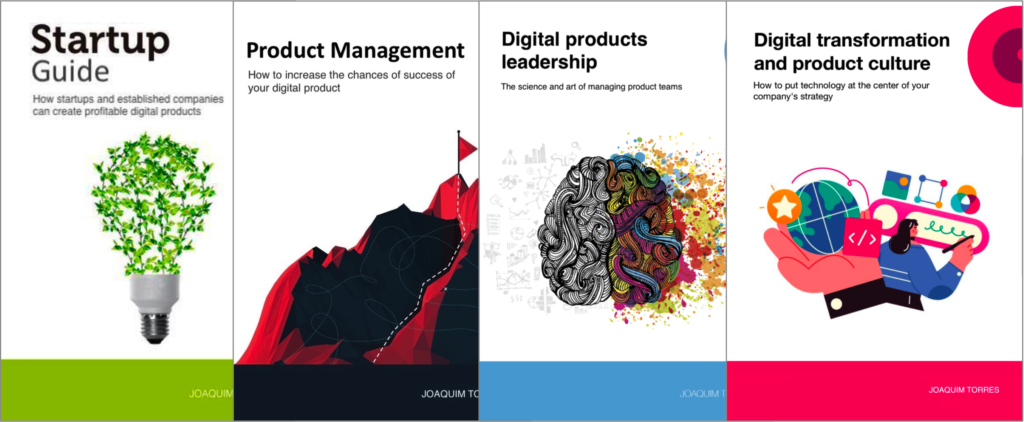
Do you work with digital products? Do you want to know more about managing a digital product to increase its chances of success, solve its user’s problems, and achieve the company objectives? Check out my Digital Product Management books, where I share what I learned during my 30+ years of experience in creating and managing digital products:
- Digital transformation and product culture: How to put technology at the center of your company’s strategy
- Leading Product Development: The art and science of managing product teams
- Product Management: How to increase the chances of success of your digital product
- Startup Guide: How startups and established companies can create profitable digital products