

Perverse Metrics, Leading Metrics, and Lagging Metrics
21 de July, 2026
From Vision to OKRs: Team, Initiatives, and the Metrics That Actually Matter
4 de August, 2026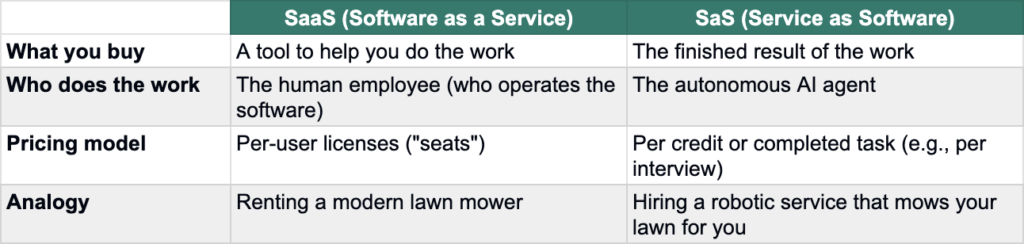
Over the past few weeks, we’ve been presenting ReveLumi as a qualitative research tool. A good tool, fast, with AI. And that’s how, without meaning to, we put ReveLumi in the wrong category, and made whoever was listening misunderstand what we were actually building.
The wrong category
When someone hears “research tool,” their mind automatically compares it to other research tools. Dovetail, Qualtrics, User Interviews. And a new tool competes with a tool that already exists, or with however the person already solves this today, so it becomes easy to say “interesting, I’ll look into it later.”
We saw this reaction from people who already work with research inside companies. Real interest, some agreed to test it, and disappeared afterward. Our hypothesis is that what was missing was what actually competes with ReveLumi: a decision stuck because of a lack of customer information. As long as we presented ReveLumi as a tool, we were competing with other tools.
Except ReveLumi isn’t a tool that helps you do research work. It does the research work.
SaaS helps you do it. SaS does it.
A new category of products is emerging, called Service as Software, and it’s gaining traction in the market. According to Y Combinator:
“Historically, services became SaaS software. More recently, they became AI copilots. […] What excites us now is the next step: AI-native companies that don’t sell software, they sell the service. Instead of giving you a tool, they simply do the work.”
SaaS (Software as a Service) gives you a tool to do the task faster. In the case of qualitative research, you still need to recruit, schedule, interview, and analyze, just with software helping at each step.
SaS (Service as Software), on the other hand, doesn’t give you a tool to help you do it. It does the work for you. You don’t need to know how to conduct a qualitative interview. ReveLumi does.
You can already see this elsewhere. Sierra doesn’t sell support software for a customer service team to operate; its agent talks directly to the end customer and resolves the issue, and the company charges per resolved ticket, not per license.
Another important point is the pricing model. Instead of charging per user using the tool, SaS companies charge per completed task.
ReveLumi, without us ever naming it, always charged the same way. We don’t charge per user accessing a dashboard. We charge per interview with insight, the completed task. Our pricing model already showed we were SaS.
Curiously, this isn’t the first time we’ve done this without naming it. An earlier product of ours, a virtual astrologer, was also SaS: the person didn’t use a tool to learn how to interpret their own birth chart. They talked with an agent that provided the birth chart interpretation service and answered their questions.
An interesting thing to watch in the market is that some SaS companies still charge per-user subscriptions, like Lovable and Replit. You describe what you want, and the agent writes the code on its own, no programming required from you. But the pricing is still half SaaS: a fixed monthly subscription, plus a layer of usage-based credits. And that credit layer is even murkier, because it doesn’t charge per completed task, it charges per computing power consumed. It’s as if Netflix charged you a variable rate for the electricity you use while watching shows and movies.
What changes when you’re offering a SaS
This changes the question a person asks to decide whether they need you, well beyond semantics.
As SaaS, the question is “will this tool help me do my work better and faster?”
As SaS, the question becomes “is it worth doing this myself, hiring someone to do it, or letting the agent do it?”
In ReveLumi’s case, we should think about the alternative to not using our agent: the person’s own time, or the cost of hiring someone.
We noticed that this shift from SaaS to SaS also changes who feels the pain. Whoever already has a structured research process, a ResearchOps team, for example, tends to see us as a tool, and a new tool competes with one that already works. Whoever struggles to do research with users because of all the difficulties of interviewing them probably resents having to do that work, not lacking a better tool to do work they already do. For that person, the question was maybe always: who can do this for me?
The lesson
We thought we were competing with research tools. We were actually competing with not doing research at all, or with hiring someone to do it.
That’s what we’re going to start saying more clearly from now on: ReveLumi does the research. It’s not software that helps you do it.
Scale your customer research
In a world where AI levels the playing field, deep customer knowledge is the one asset your competitors can’t copy. ReveLumi was built exactly for that. Learn more at revelumi.com.
Workshops, coaching, and advisory services
I’ve been helping companies and their leaders (CPOs, heads of product, CTOs, CEOs, tech founders, and heads of digital transformation) bridge the gap between business and technology through workshops, coaching, and advisory services on product management and digital transformation.
Gyaco Podcasts
At Gyaco, we believe in the power of conversations to spark reflection and learning. That’s why we’ve created “Produto em Pauta” podcast, with new episodes every Thursday.
The main series is called Mentorias: coaching conversations with product professionals, built on the idea that one person’s questions are often the questions of many others. We explore concrete challenges and turn experience into practical insights you can apply in your own context.
Available on YouTube and Spotify. Recorded in Portuguese, with English subtitles on YouTube.
Digital Product Management Books
Do you work with digital products? Do you want to know more about managing a digital product to increase its chances of success, solve its user’s problems, and achieve the company objectives? Check out my Digital Product Management books, where I share what I learned during my 30+ years of experience in creating and managing digital products:
- Digital transformation and product culture: How to put technology at the center of your company’s strategy
- Leading Product Development: The art and science of managing product teams
- Product Management: How to increase the chances of success of your digital product
- Startup Guide: How startups and established companies can create profitable digital products