

The impact of vibe-coding on the 4 essential principles of product culture
4 Nov 2025
Downsizing and layoffs
18 Nov 2025I’ve known Marty Cagan since 2007. At the time, I was at Locaweb, trying to understand how other companies approached their product development challenges. During that search, I came across the SVPG blog and was struck by how precisely Marty described the situations we were experiencing at Locaweb. It felt like he had a hidden camera inside the company. I decided to send him a message, and we ended up bringing Marty to Brazil for the first time to help us improve the way we developed products. Since then, I’ve kept regular conversations with Marty about what it takes to build better products—products that solve customer problems through technology while generating results for the business.
In August 2020, I joined Lopes, the largest real estate brokerage in Brazil, founded in 1935, to support its digital transformation. The goal at the time was to face competition from two well-funded startups, Loft and QuintoAndar. I recall discussing this challenge with Marty, and he noted that in traditional companies undergoing transformation, it is necessary to change the way products are developed.
This shift in how products are built was something I had already experienced at Gympass. When I joined the company in 2018, it had 800 employees across 14 countries. Still, the product development team (engineering, product design, product management, and data) had only 32 people and operated by responding to requests from commercial and operations teams. Over the course of two years, we evolved the way we built products, which became essential when the pandemic struck.
We had been working for about two months on the PoC of Gympass Wellness, a marketplace of apps that allowed our users to work out, meditate, and take care of their nutrition from home, an excellent solution for our B2B clients whose employees were in lockdown. Another immediate priority was helping gyms, which had to close their doors, survive the restrictions. In just two weeks, we developed Gympass Live Classes, live-streamed classes offered by our partner gyms. It was beneficial for the gyms, which could continue operating, and for our users, who retained the live class experience. All of this was only possible because we had significantly evolved our approach to building products.
Having lived this change at Gympass, when I arrived at Lopes, I realized the challenges were the same and that I would once again need to lead a transformation in how products were built. At that point, I saw the need to make Lopes’ product culture explicit. At the end of 2020, we defined four principles that would guide us:
- Deliver early and often
- Focus on the problem
- Deliver outcomes
- Ecosystem mindset
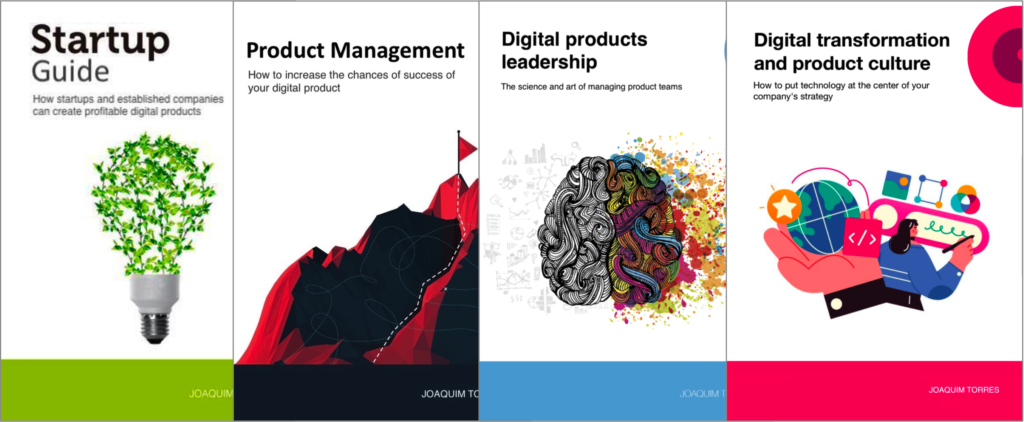
These were the principles we used intuitively at Gympass and intentionally at Lopes. These experiences eventually led to my fourth book, Digital Transformation and Product Culture, because it became clear that you cannot drive digital transformation without changing how products are built. And the way we build products is simply the Product Culture we practice every day.
In 2022, Marty began speaking more about the Product Operating Model, which describes how the best product companies operate. What he observed over decades of advisory and coaching work is that companies need to:
- change how they build and deploy;
- change how they solve problems;
- change how they decide which problems to solve.
The Similarities: Two Ways of Describing the Same Transformation
When I compared the Product Operating Model with what I had been calling Product Culture, I noticed something interesting: both described the same transformation, in almost the same terms, just using slightly different formats.
While the Product Operating Model highlights that companies need to evolve in three core dimensions (how they build, how they solve problems, and how they decide which problems to solve), Product Culture makes explicit what needs to be done to enable that evolution (deliver early and often, focus on the problem, deliver outcomes, and ecosystem mindset).
Ultimately, both describe the same concept: how teams think and work to deliver value.
If we look closely, we can draw a direct parallel between the dimensions of the Product Operating Model and the principles of Product Culture:
| Product Operating Model | Product Culture | What Needs to Change in Practice |
|---|---|---|
| How products are built | Deliver early and often | Short cycles, continuous experimentation, fewer big bets, more real and frequent learning. |
| How problems are solved | Focus on the problem | Leadership defines the problem and the purpose; teams have autonomy to discover the best solution. |
| Deciding which problems to solve | Deliver outcomes | Prioritize based on impact: what changes customer behavior and drives business results. |
The three dimensions of the Product Operating Model map directly to three of the principles of Product Culture. The fourth principle, Ecosystem Mindset, is evident in the stories, examples, and especially in the consequences, even if it’s not explicitly stated in the Product Operating Model.
Two independent paths, same conclusion
It’s like what happens in science when two researchers, observing the same phenomenon, arrive at the same fundamental laws through different methods.
I arrived at Product Culture through the practice of transforming companies from the inside. Marty arrived at the Product Operating Model by observing consistent patterns across the world’s best product companies.
The phenomenon is the same. The conclusion is the same. The words are what differ.
And that is, perhaps, the most interesting part: when different people, in different contexts, reach the same conclusion, it’s because we are looking at something structural — something that does not depend on trends, tools, or frameworks.
It means we are, in fact, describing the new dominant logic of how digital products are built in the 21st century.
What really matters
Whether you call it a Product Operating Model or a Product Culture is mostly a matter of preference, style, and reference. What matters is what sits underneath:
- products exist to solve customer problems while generating outcomes for the business;
- teams need autonomy to discover solutions;
- leadership sets direction, not tasks;
- outcomes matter more than outputs;
- learning is continuous.
Ultimately, we are describing the same transformation.
And it’s not optional for companies that want to remain relevant.
Workshops, coaching, and advisory services
I’ve been helping companies and their leaders (CPOs, heads of product, CTOs, CEOs, tech founders, and heads of digital transformation) bridge the gap between business and technology through workshops, coaching, and advisory services on product management and digital transformation.
Gyaco Podcasts
At Gyaco, we believe in the power of conversations to spark reflection and learning. That’s why we have three podcasts that explore the world of product management from different angles:
- Produto em Pauta: In the new season, titled “Beyond the Buzzwords”, Felipe Castro and I demystify product terms with real examples from our clients. Available on YouTube and Spotify. Recorded in Portuguese, with English subtitles on YouTube.
- Product Chronicles, the Brazilian Way: with Fábio Martinelli Duarte and Paulo Caroli — the Brazilian way of building products: stories, challenges, and lessons learned, featuring case studies from our clients. Available on YouTube and Spotify. Recorded in English, with Portuguese subtitles on YouTube.
- Beyond the Article, Expanded by AI: C.L.A.R.A. (Creative Language AI for Reflective Augmentation) chats with my AI clone, JocAI, expanding on my articles with new perspectives. Available on YouTube and Spotify. Thanks to AI, episodes are available in English, Spanish, and Portuguese.
Digital Product Management Books
Do you work with digital products? Do you want to know more about managing a digital product to increase its chances of success, solve its user’s problems, and achieve the company objectives? Check out my Digital Product Management books, where I share what I learned during my 30+ years of experience in creating and managing digital products:
- Digital transformation and product culture: How to put technology at the center of your company’s strategy
- Leading Product Development: The art and science of managing product teams
- Product Management: How to increase the chances of success of your digital product
- Startup Guide: How startups and established companies can create profitable digital products