

From Vision to OKRs: Team, Initiatives, and the Metrics That Actually Matter
4 de August, 2026Measuring Digital and Product Maturity
18 de August, 2026This article is an excerpt from the book “Digital Transformation and Product Culture: How to put technology at the center of your company’s strategy”.
OKRs and financial bonuses
A fairly common mistake we can make when using OKRs is tying the achievement of OKRs to some kind of financial bonus. We shouldn’t do this, because OKRs are defined by the teams themselves. If we attach a financial reward to hitting OKRs, the team will obviously define OKRs that are easier to hit.
We should have clearly defined targets for bonus payouts. OKRs should serve as a tool for reaching those targets, and those targets should serve as the focus for defining OKRs. At Lopes, we had profit-sharing based on revenue and profit targets, and we defined OKRs that helped us get there.
Scaling OKRs
When it’s a single person, or a small team, it’s easy to define and implement OKRs. In large organizations, with tribes and squads, defining and implementing OKRs can be a fairly complicated task. My recommendation in that situation is to have someone responsible for coordinating the OKR-definition process, with the goal of helping teams connect their OKRs to the company’s strategic objectives, and finding synergies, dependencies, and overlaps. In a tribe with 4 squads, each squad can define its own OKRs, but the tribe’s leader(s) should check that those OKRs are aligned with the strategic objectives and help resolve dependencies.
When I was at Lopes, my Lopes Labs team included an engineering lead, a technical product lead (data and architecture), a marketing lead, and 5 tribe leads. About two weeks before wrapping up a quarter and starting the next, we would begin working on the next quarter’s OKRs. Each of these leads worked with their respective teams to define OKRs. We then brought them into our leadership meeting, which happened 3 times a week, where each leader presented their OKRs to everyone else and we discussed alignment with our strategic objectives, as well as any dependencies and overlaps.
In Q4 2020, the first quarter we ran OKRs at Lopes Labs, the full initial list had 45 objectives with 130 KRs. From that full list, we selected the OKRs we’d track in our weekly meeting, which ended up being 12 objectives and 53 KRs. Some objectives overlapped, and others we decided were too specific to a single team, with no real benefit to tracking them with the whole group.
During that quarter, once we had defined the OKRs, we scheduled a meeting with Lopes’ leadership to present them and gather feedback. Then we ran the weekly check-in just among us, the Lopes Labs leads. The following quarter, Q1 2021, we kept a meeting with leadership to present the OKRs, but we opened up the weekly check-in meeting to everyone at Lopes Labs. That gave other people on the teams a chance to present their own OKRs, not just leadership. By Q2 2021, we stopped doing the OKR presentation meeting for leadership altogether and instead invited not just leadership, but the entire Lopes leadership team to join our weekly OKR check-in.
One interesting point worth mentioning: the HR team that supported Lopes Labs decided to follow along with our OKR usage starting in the very first quarter we adopted it, and shared their own objectives and key results with us. HR eventually brought this tool to the rest of HR and to other areas of the company, like Operations and Legal.
Recommendation
OKRs are a very powerful tool for helping execute strategy, but despite being powerful, they’re only a tool. They exist to serve us. We don’t serve OKRs. Be careful with phrases like “if it’s not in the OKRs, I’m not going to do it,” since they signal that the person is serving the tool instead of the other way around. Another important point to watch out for is not tying OKR achievement to any kind of financial bonus, to avoid teams setting overly timid OKRs that do little to help execute strategy and reach your vision.
In summary
- OKRs (Objectives and Key Results) are a very useful tool to help us execute our strategy and get closer and closer to our vision.
- Even though OKRs are well known, there are some important precautions to take: cadence, especially check-in cadence; perverse metrics; leading and lagging metrics; shared goals as a tool for turning a group of people into a team; the option of using OKRs to track initiatives; the different types of metrics (internal, user, and business); and the risks of using OKRs to pay financial bonuses.
- To define OKRs, we need to have vision, strategy, and team structure already defined. OKRs are defined by the teams themselves, once they’re clear on the strategic objectives we need to reach.
- To scale OKRs across structures with many teams, you’ll need someone to coordinate between teams, helping them define OKRs aligned with the strategic objectives and identifying any synergies, dependencies, and overlaps.
Digital transformation and product culture
This article is another excerpt from my newest book “Digital transformation and product culture: How to put technology at the center of your company’s strategy“, which I will also make available here on the blog. So far, I have already published here:
- About the book
- Part 1: Concepts
- Chapter 1: The so-called digital transformation – Project and Product
- Chapter 2: Uncertainty and digital transformation
- Chapter 3: Types of company
- Chapter 4: Type of company vs digital maturity
- Chapter 5: Business models
- Chapter 6: Agile, digital and product culture
- Part 2: Principles
- Chapter 7: Deliver early and often – Measuring and managing the productivity – Case study: Dasa Group – Case study: Itaú Unibanco
- Chapter 8: Focus on the problem – The Famous Product Discovery – Why the “business demands => IT implements” model does not work – Case study: Magazine Luiza
- Chapter 9: Result delivery – Outsource or internal team? – Case study: Centauro
- Chapter 10: Ecosystem mindset
- Part 3: Tools
- Chapter 11: Product Vision – Product vision examples
- Chapter 12: Product Strategy
- Chapter 13: Team Structure – Structuring effective product development teams – Structural teams – Team structure spreadsheet – Downsizing and layoffs – CTO + CPO – Internationalization – Outsourced team – Tuckman model – Dependencies between teams – Should we have a dedicated innovation team? – Should we have a team dedicated to fixing bugs? – Business Units – Why Individual Bonuses Don’t Work in Product Teams – What makes a group of people behave like a team?
- Chapter 14: What are OKRs and How to Get the Cadence Right – Perverse Metrics, Leading Metrics, and Lagging Metrics – From Vision to OKRs: Team, Initiatives, and the Metrics That Actually Matter – OKRs, Financial Bonuses, and How to Scale to Large Teams
Scale your customer research
In a world where AI levels the playing field, deep customer knowledge is the one asset your competitors can’t copy. ReveLumi was built exactly for that. Learn more at revelumi.com.
Workshops, coaching, and advisory services
I’ve been helping companies and their leaders (CPOs, heads of product, CTOs, CEOs, tech founders, and heads of digital transformation) bridge the gap between business and technology through workshops, coaching, and advisory services on product management and digital transformation.
Gyaco Podcasts
At Gyaco, we believe in the power of conversations to spark reflection and learning. That’s why we’ve created “Produto em Pauta” podcast, with new episodes every Thursday.
The main series is called Mentorias: coaching conversations with product professionals, built on the idea that one person’s questions are often the questions of many others. We explore concrete challenges and turn experience into practical insights you can apply in your own context.
Available on YouTube and Spotify. Recorded in Portuguese, with English subtitles on YouTube.
Digital Product Management Books
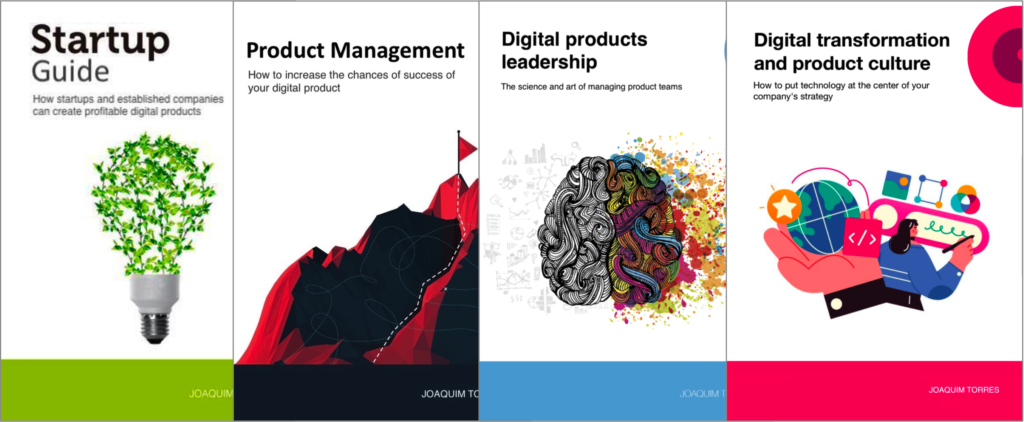
Do you work with digital products? Do you want to know more about managing a digital product to increase its chances of success, solve its user’s problems, and achieve the company objectives? Check out my Digital Product Management books, where I share what I learned during my 30+ years of experience in creating and managing digital products:
- Digital transformation and product culture: How to put technology at the center of your company’s strategy
- Leading Product Development: The art and science of managing product teams
- Product Management: How to increase the chances of success of your digital product
- Startup Guide: How startups and established companies can create profitable digital products