

New book on designing product organizations
25 Aug 2026Hack 2: Alpha, beta, and go-live terminology
8 Sep 2026This article is an excerpt from the book “Digital Transformation and Product Culture: How to put technology at the center of your company’s strategy“.
Creating and maintaining a digital product culture can be a major challenge. We are talking about behavioral change, altering how people react and respond to certain situations. There might be resistance due to fear of change or loss of power; there could be disbelief due to previous unsuccessful attempts. Additionally, individuals with little experience working with product development teams may resort to less effective approaches.
That’s why I’ve developed some techniques throughout my career that I refer to as hacks – pragmatic solutions for the day-to- day challenges of digital transformation. These hacks help in establishing and reinforcing a digital product culture.
Hack #1: Start small
It is quite common for companies, especially large ones, to prioritize digital transformation and embark on large-scale projects, often led by major consulting firms like BCG, McKinsey, or Accenture. These initiatives can take months and require substantial investment, with no guarantee of achieving the desired outcomes. Additionally, there may be individuals within the company resistant to change due to fear of learning something new, losing power, or other reasons.
As discussed in the chapter on Rapid and Frequent Deliveries, seeking to deliver value quickly to customers allows for prompt feedback to ensure that the project is on the right track. The same principle applies to digital transformation: start small, achieve quick results, and assess whether the organization is on the right track. Starting with a small team—such as a squad consisting of a product manager, a designer, and a few engineers—and letting them operate for a period while following the four principles outlined in Part 2 helps gauge progress. Subsequently, the scope can be expanded, bringing more people into the transformation. This approach accounts for the possibility that some individuals may not adapt to the change.
At Locaweb, in 2007, we began exploring agile methodologies and culture. Recognizing the potential benefits, we decided to adopt them within one of our teams. We started small, learned, adapted, and then scaled up to more teams within the company. This phased approach allowed us to overcome resistance within the team. However, we did lose some team members who did not adapt to the new way of working.
By starting small, organizations have the opportunity to experiment with new approaches before fully committing to the change, thereby minimizing resistance.
Next we will talk about the second hack, the alpha, beta and go-live terminology.
Digital transformation and product culture
This article is another excerpt from my newest book “Digital transformation and product culture: How to put technology at the center of your company’s strategy“, which I will also make available here on the blog. So far, I have already published here:
- About the book
- Part 1: Concepts
- Chapter 1: The so-called digital transformation – Project and Product
- Chapter 2: Uncertainty and digital transformation
- Chapter 3: Types of company
- Chapter 4: Type of company vs digital maturity
- Chapter 5: Business models
- Chapter 6: Agile, digital and product culture
- Part 2: Principles
- Chapter 7: Deliver early and often – Measuring and managing the productivity – Case study: Dasa Group – Case study: Itaú Unibanco
- Chapter 8: Focus on the problem – The Famous Product Discovery – Why the “business demands => IT implements” model does not work – Case study: Magazine Luiza
- Chapter 9: Result delivery – Outsource or internal team? – Case study: Centauro
- Chapter 10: Ecosystem mindset
- Part 3: Tools
- Chapter 11: Product Vision – Product vision examples
- Chapter 12: Product Strategy
- Chapter 13: Team Structure – Structuring effective product development teams – Structural teams – Team structure spreadsheet – Downsizing and layoffs – CTO + CPO – Internationalization – Outsourced team – Tuckman model – Dependencies between teams – Should we have a dedicated innovation team? – Should we have a team dedicated to fixing bugs? – Business Units – Why Individual Bonuses Don’t Work in Product Teams – What makes a group of people behave like a team?
- Chapter 14: What are OKRs and How to Get the Cadence Right – Perverse Metrics, Leading Metrics, and Lagging Metrics – From Vision to OKRs: Team, Initiatives, and the Metrics That Actually Matter – OKRs, Financial Bonuses, and How to Scale to Large Teams
- Chapter 15: Measuring Digital and Product Maturity
- Chapter 16: Hacks to help in the digital transformation journey – Hack #1: Start small
Scale your customer research
In a world where AI levels the playing field, deep customer knowledge is the one asset your competitors can’t copy. ReveLumi was built exactly for that. Learn more at revelumi.com.
Workshops, coaching, and advisory services
I’ve been helping companies and their leaders (CPOs, heads of product, CTOs, CEOs, tech founders, and heads of digital transformation) bridge the gap between business and technology through workshops, coaching, and advisory services on product management and digital transformation.
Gyaco Podcasts
At Gyaco, we believe in the power of conversations to spark reflection and learning. That’s why we’ve created “Produto em Pauta” podcast, with new episodes every Thursday.
The main series is called Mentorias: coaching conversations with product professionals, built on the idea that one person’s questions are often the questions of many others. We explore concrete challenges and turn experience into practical insights you can apply in your own context.
Available on YouTube and Spotify. Recorded in Portuguese, with English subtitles on YouTube.
Digital Product Management Books
Do you work with digital products? Do you want to know more about managing a digital product to increase its chances of success, solve its user’s problems, and achieve the company objectives? Check out my Digital Product Management books, where I share what I learned during my 30+ years of experience in creating and managing digital products:
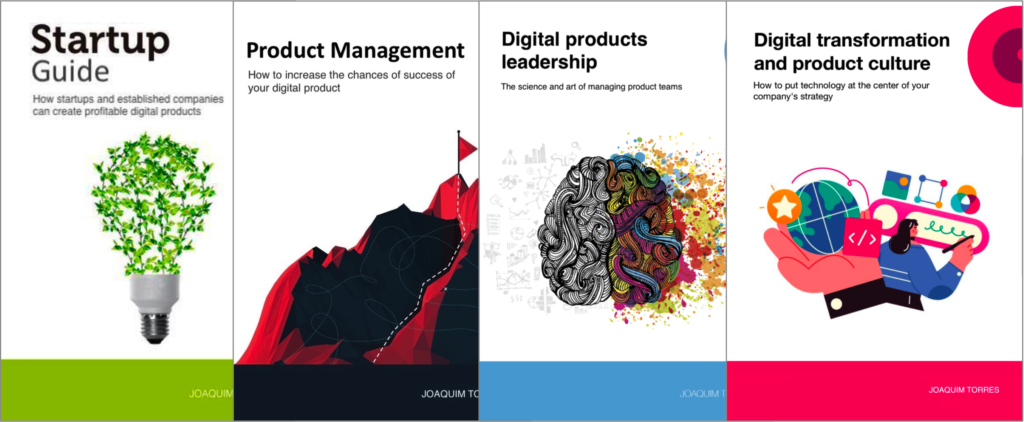
- Digital transformation and product culture: How to put technology at the center of your company’s strategy
- Leading Product Development: The art and science of managing product teams
- Product Management: How to increase the chances of success of your digital product
- Startup Guide: How startups and established companies can create profitable digital products