

Tools that are potential strengths of incumbents
27 Oct 2026Throughout this book, we have explored concepts, principles, and tools that enhance the chances of success in a digital transformation journey. However, none of these matter without the most essential component of any company: people. They are the ones who drive this journey forward and ultimately determine the results it will achieve.
We’ve reached the end of the book! Along this journey, we explored (or revisited) key concepts, principles, and tools that increase the chances of success in digital transformation journeys.
Concepts and tools are important and must be understood, but new tools and new concepts can be (and will be) created, so we need to be in constant learning mode. On the other hand, principles guide our behavior, helping us react to situations, solve problems, and make the most of concepts and tools.
The four principles are:
- Deliver early and often: it is not possible to innovate and build new digital products with monthly or quarterly soft- ware releases. We have to put new software into production at least every week — ideally every day, multiple times a day. Only then will we be able to experiment and test solution hypotheses to find the one that will bring us, as quickly as possible, closer to the goals we want to achieve.
- Focus on the problem: understand the problem well and only then think about possible solutions. Test different hypotheses to see which one provides the best and fastest solution. It is solution discovery, a way to mitigate product development risks and increase the chances of success of the product to be developed.
- Result delivery: what a product development team has to deliver are results. Products, websites, apps, features, algo- rithms are not the objective: they are means for delivering results — results for the company, which owns the software and invests a lot of money in its development, and for customers and users, who hope to have their problem solved or their need met by the digital product.
- Ecosystem mindset: focusing on the customer, but in a turbocharged version. Every company has more than one customer, and it is necessary to understand these different types of customers and their relationships. Even companies that initially think they have a single type of customer may see more than one customer in their ecosystem, as they use their product in interactions with other people or companies.
One more element is missing
We talk about concepts, principles and tools, but this is useless without a fourth element, which does not fit into any of these three categories: people.
The digital transformation journey is made by people. They are the ones who will define the path and follow this journey. They understand the concepts, follow the principles, and use the tools to achieve the company’s goals and results.
Therefore, to have a successful digital transformation journey, we need to (1) have digitally experienced people and (2) increase the digital knowledge of everyone in the company.
Have digitally experienced people
It will be very difficult to take this journey if no one in your company has taken it before. No matter how many books, courses and lectures people consume, nothing compares to the practical experience of having lived this journey, of having brought to the market digital products that solve customer problems and achieve the results expected from the company. People with this experience will help the company understand the potential of using digital products and help design a strategy to fully leverage this potential.
There are two ways to bring people with this experience:
- Consultants: there are many people who have gone through digital journeys and have accumulated a lot of experience on how to bring successful products to the market. After years of having this hands-on experience as product leaders in companies, these people may have decided to become consultants, helping companies on this journey, sharing their learnings through advice, mentoring, training and even having an interim role of product leadership in the company. I myself have been working this way since mid-2022 and have helped some companies connect technology and business to generate more results. There are also large consulting companies such as McKinsey, BCG or Accenture. Typically these companies have people who are very good at business consultancy; however, the consultancy package they offer usually includes digital product development people, which will direct product development efforts toward a feature factory model, with no connection to the principle we saw in the Results Delivery chapter.
- Employees: Hiring an experienced digital consultant can help, but without someone within the company with prior digital experience to lead the transformation, progress will be difficult. I felt this firsthand in some engagements as a consultant. I was once hired to help with the digital transformation of a company, but I was unable to move the topic forward within the company until there was someone who had this experience and was leading this journey in the company’s day-to-day operations. It’s essential to bring in new employees with experience in digital product development, and you need to have at least one person with this experience in the company’s senior leadership.
These two ways are not exclusive, but, as I already mentioned, just bringing in consultants will be ineffective. It is necessary to have someone with digital experience traveling this journey in the company’s day-to-day operations. It is necessary to have someone employed by the company who has had experience in companies with greater digital and product maturity and who can bring this experience to help in your company’s digital transformation journey. I once agreed to work with a client who had no one with prior digital experience. Although they understood the concepts, principles and tools that I presented, nothing changed in the company’s day-to-day operations, until they made the decision to hire a person to the board who had already worked for more than 5 years in digital native companies. Only when this person joined did the themes related to digital transformation begin to evolve.
Increase the knowledge of everyone in the company about digital
Having people, employees and consultants, experienced in digital product development is essential for the success of your digital transformation journey, but it is not enough. No matter how much you bring in people with experience, the rest of the company does not have this experience, which will be acquired along the way, but they will need:
- Training: people without adequate experience in digital products will need to learn about the subject quickly, to be able to effectively contribute to this journey. It can be through books (like this one!), courses, events, blogs, in- company training, etc. This topic must be central, not just for the product development team but for all areas of the company to understand how digital can drive impact.
- Willingness to learn: there is no point in training if there is no willingness to learn. This relates to the concept of fixed vs. growth mindset, introduced by American psychologist Carol Dweck. People who have a fixed mindset believe that their traits, talents and behaviors are fixed and unchanging. They believe they were born a certain way and cannot change, remaining that way forever. People who cultivate a growth mindset believe that intelligence is changeable and can be increased through self-effort. They know that they can become smarter through study and training. For a digital transformation journey to be successful, we need people with a growth mindset. Frederico Trajano, CEO of Magazine Luiza, really likes the book Mindset: The new psychology of success, by Carol Dweck (2017), in which she explains this concept in detail. This book was recommended by Frederico to all of Magazine Luiza’s more than 1,200 managers as prior reading for the 2019 Strategic Positioning work, whose annual motto was “Chinese growth”.
All set, shall we start?
Ready! Now you know what is needed to increase the chances of success in your digital transformation journey. Concepts, principles, tools and people.
This journey has a beginning, but no definitive end. With each new step you take, new opportunities will appear to use digital in order to enhance your results, helping you achieve the company’s strategic objectives while solving your customers’ problems and needs.
I hope this book supports you in your digital transformation journey. I’m always sharing my new learnings at https://gyaco.com/en. If you believe I can help you further on your journey, count on me! And be sure to share your learnings and experiences on this journey. I’ll love learning more from you!
If you found this book valuable, consider sharing your review on Amazon and LinkedIn. This will help other people learn about this book and increase the chances of success in their digital transformation journeys.
Digital transformation and product culture
This article is the final chapter from my newest book “Digital transformation and product culture: How to put technology at the center of your company’s strategy“, which I will also available here on the blog:
- About the book
- Part 1: Concepts
- Chapter 1: The so-called digital transformation – Project and Product
- Chapter 2: Uncertainty and digital transformation
- Chapter 3: Types of company
- Chapter 4: Type of company vs digital maturity
- Chapter 5: Business models
- Chapter 6: Agile, digital and product culture
- Part 2: Principles
- Chapter 7: Deliver early and often – Measuring and managing the productivity – Case study: Dasa Group – Case study: Itaú Unibanco
- Chapter 8: Focus on the problem – The Famous Product Discovery – Why the “business demands => IT implements” model does not work – Case study: Magazine Luiza
- Chapter 9: Result delivery – Outsource or internal team? – Case study: Centauro
- Chapter 10: Ecosystem mindset
- Part 3: Tools
- Chapter 11: Product Vision – Product vision examples
- Chapter 12: Product Strategy
- Chapter 13: Team Structure – Structuring effective product development teams – Structural teams – Team structure spreadsheet – Downsizing and layoffs – CTO + CPO – Internationalization – Outsourced team – Tuckman model – Dependencies between teams – Should we have a dedicated innovation team? – Should we have a team dedicated to fixing bugs? – Business Units – Why Individual Bonuses Don’t Work in Product Teams – What makes a group of people behave like a team?
- Chapter 14: What are OKRs and How to Get the Cadence Right – Perverse Metrics, Leading Metrics, and Lagging Metrics – From Vision to OKRs: Team, Initiatives, and the Metrics That Actually Matter – OKRs, Financial Bonuses, and How to Scale to Large Teams
- Chapter 15: Measuring Digital and Product Maturity
- Chapter 16: Hacks to help in the digital transformation journey – Hack #1: Start small – Hack 2: Alpha, beta, and go-live terminology – Hack 3: What is the problem? – Hack 4: Examples – Hack 5: Digital and business drops – Hack 6: Showcase – Hack 7: Productizing exceptions
- Chapter 17: Tools that are potential strengths of incumbents
- Part 4: People
- Chapter 18: Conclusion: it’s all about people
Scale your customer research
In a world where AI levels the playing field, deep customer knowledge is the one asset your competitors can’t copy. ReveLumi was built exactly for that. Learn more at revelumi.com.
Workshops, coaching, and advisory services
I’ve been helping companies and their leaders (CPOs, heads of product, CTOs, CEOs, tech founders, and heads of digital transformation) bridge the gap between business and technology through workshops, coaching, and advisory services on product management and digital transformation.
Gyaco Podcasts
At Gyaco, we believe in the power of conversations to spark reflection and learning. That’s why we’ve created “Produto em Pauta” podcast, with new episodes every Thursday.
The main series is called Mentorias: coaching conversations with product professionals, built on the idea that one person’s questions are often the questions of many others. We explore concrete challenges and turn experience into practical insights you can apply in your own context.
Available on YouTube and Spotify. Recorded in Portuguese, with English subtitles on YouTube.
Digital Product Management Books
Do you work with digital products? Do you want to know more about managing a digital product to increase its chances of success, solve its users’ problems, and achieve the company’s objectives? Check out my Digital Product Management books, where I share what I learned during my 30+ years of experience in creating and managing digital products:
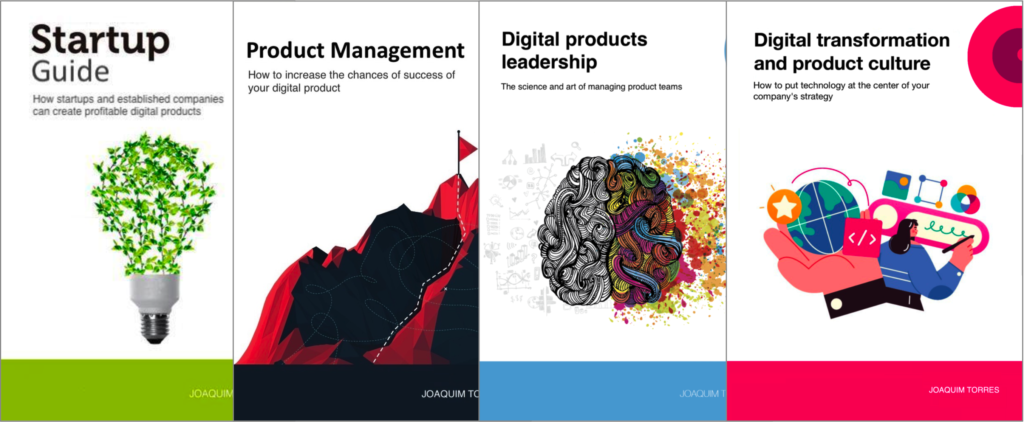
- Digital transformation and product culture: How to put technology at the center of your company’s strategy
- Leading Product Development: The art and science of managing product teams
- Product Management: How to increase the chances of success of your digital product
- Startup Guide: How startups and established companies can create profitable digital products